Put these numbers in counting order, starting with the smallest.
- 2
- 0
- 1
Explanation and discussion
The order is 0, 1, 2. Each step increases the number by one.
What does zero tell us about the number of objects?
 KablamMy collection
Order number cards and reason about one more and one less.
Order three or four numbers within 100; identify one more and one less.
Year 1 · 5–6 years · 30 challenges
Order three or four numbers within 100; identify one more and one less.
Teacher reads prompts and word cards. Use touch ordering or oral response cards. A teacher-drawn number line can support discussion; none is supplied on screen. Check the requested direction each time. Values stay within 0–100; number-word cards stay within 1–20.
Give everyone time to think and discuss before one pupil acts at the board. The class explains and confirms together; hints and explanations stay until you move on.
Use an up-to-date browser on a computer connected to a whiteboard or shared display. Touch, mouse and keyboard; optional audio and reduced motion. No pupil accounts or personal devices.
Choose from 5 challenges up to the full activity. Discussion determines the duration: you set the pace.
The order is 0, 1, 2. Each step increases the number by one.
What does zero tell us about the number of objects?
The order is 58, 59, 60, 61. Every move adds just one, including the change from 59 to 60.
What would come immediately before the first card?
One less than 18 is 17, one more is 19, and twenty is 20. The correct values are 17, 18, 19, 20.
Explain how you chose the first and last cards.
 Counting patternsYear 1 · FreeCount in twos, fives and tens; identify a missing term without multiplying formally.
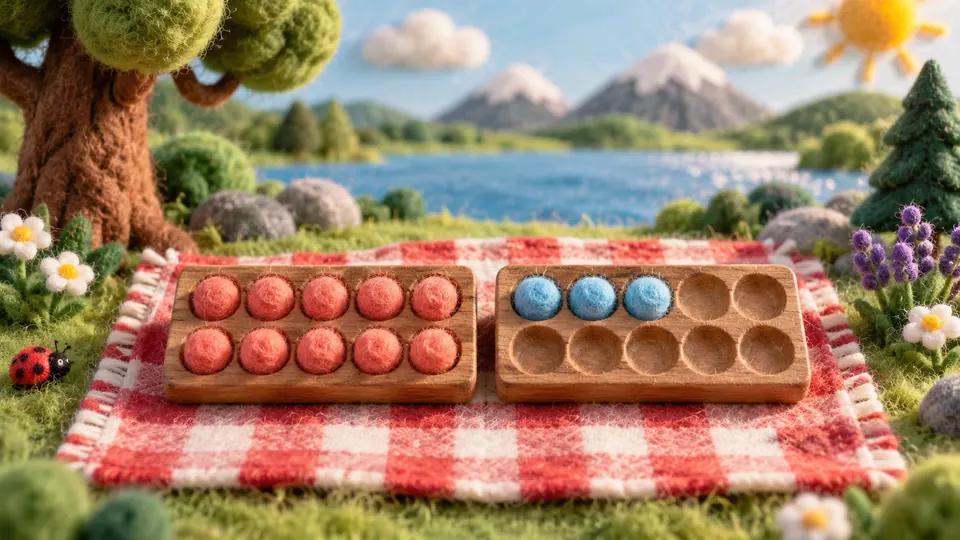
 Count without missingYear 1 · FreeCount pictured sets to 20, including zero; match numeral, word and quantity.
 Ten and some moreYear 1 · FreeCompose teens as ten and ones using ten frames; distinguish 14 from 41.